
Mountain Wellness & Physical Therapy was founded with a clear purpose: to help people keep doing the outdoor activities they love – stronger, longer, and with more confidence in their bodies. Led by founder and owner Charlotte Walters, the practice takes a holistic, movement and lifestyle-focused approach to care that goes far beyond treating isolated injuries. Charlotte’s own journey into physical therapy began as a patient after an athletic injury sidelined her from running and biking, an experience that shaped her belief in movement as both physical medicine and mental wellbeing. With nearly two decades of experience and advanced training spanning manual therapy, dry needling, and functional nutrition for chronic pain, Charlotte built Mountain Wellness to support long-term healing, performance, and resilience. As a growing outdoor-focused business in Western North Carolina and a member of the Outdoor Business Alliance, Mountain Wellness is helping shift how the outdoor community thinks about pain, performance, and sustainable health.
1. For those who may be new to Mountain Wellness & Physical Therapy, can you share what you do and what inspired you to create a more holistic, movement and lifestyle-focused practice?
Mountain Wellness exists to help outdoor enthusiasts stay active in the sports and hobbies they love by providing holistic, movement- and lifestyle-focused care. Rooted in community and guided by the belief that we are all uniquely and beautifully made, our work focuses on supporting people in moving well, healing fully, and living balanced, adventurous lives – on the trails, in the gym, and beyond.
I’ve been a physical therapist for 18 years, working across a wide range of settings—from busy outpatient sports clinics and collegiate athletic training rooms to home health with individuals navigating long-term health challenges. No matter where I worked, what stood out most was how much more progress people could make when care extended beyond treating a single injury and instead supported how they moved, lived, and showed up day to day.
Many of the people we now serve are outdoor enthusiasts and active individuals who don’t just want to recover—they want to keep riding, running, hiking, and exploring for years to come. Over time, I felt the growing tension between what physical therapy should be and what the traditional healthcare system often allows it to be. That disconnect eventually led to a crossroads: either step away from the profession or build a practice that allowed for deeper care, stronger relationships, and sustainability for both clients and clinicians.
After 6 years, we have grown to having two clinicians, a community PT ambassador and a social media manager. We have added women’s health to fully support our active female clientele and have a growing vision for the future.
Mountain Wellness & Physical Therapy continues to grow out of that original crossroads.. It’s a space built around movement, lifestyle, and long-term health—where people are supported not just in healing, but in continuing to do the activities they love.
2. Mountain Wellness emphasizes changing mindsets around pain and performance. What mindset shifts do you see most commonly make a difference for your clients?
One of the most meaningful shifts we see is when people begin to understand that pain isn’t always a sign of something to fear. Many outdoor enthusiasts and active adults are used to either pushing through discomfort or completely backing away from movement when something hurts. Neither approach tends to support long-term health or performance.
We spend a lot of time helping clients see pain as information rather than a stop sign. When people understand how adaptable and resilient their bodies really are, they move with more confidence and less fear—and that alone often changes how they feel.
Another important shift is moving from a short-term mindset of “fixing a problem” to a longer-term view of care. Instead of asking, “How fast can I get back?” the question becomes, “How do I keep doing this for years?” That opens the door to strength training, recovery, sleep, nutrition, and nervous system health as part of performance—not separate from it.
When clients begin to see physical therapy as support for longevity rather than something you only need when you’re injured, they become more engaged, more consistent, and more connected to their bodies—and that’s where real change happens.
3. How has connecting with outdoor-focused organizations or communities (like the Outdoor Business Alliance) influenced your business or expanded your impact?
When we opened Mountain Wellness, we knew we didn’t want to exist within examination rooms or medical referral networks. We wanted to be part of the everyday spaces where people move, train, and connect.
Early on, that meant hosting group rides, runs, and outdoor-focused workshops as a way to simply bring people together around shared movement. Those experiences shaped how we practice today. When we meet people in the spaces they already move and train, care becomes more relatable and relational versus a sterile medical office.
As we’ve grown, those relationships have naturally expanded into partnerships with outdoor-focused organizations that serve the same community in different ways. Local gear builders, performance gyms, and outdoor businesses all support the same adventurers we do—just at different points along their journey. Keeping people moving and healthy strengthens every part of the outdoor economy.
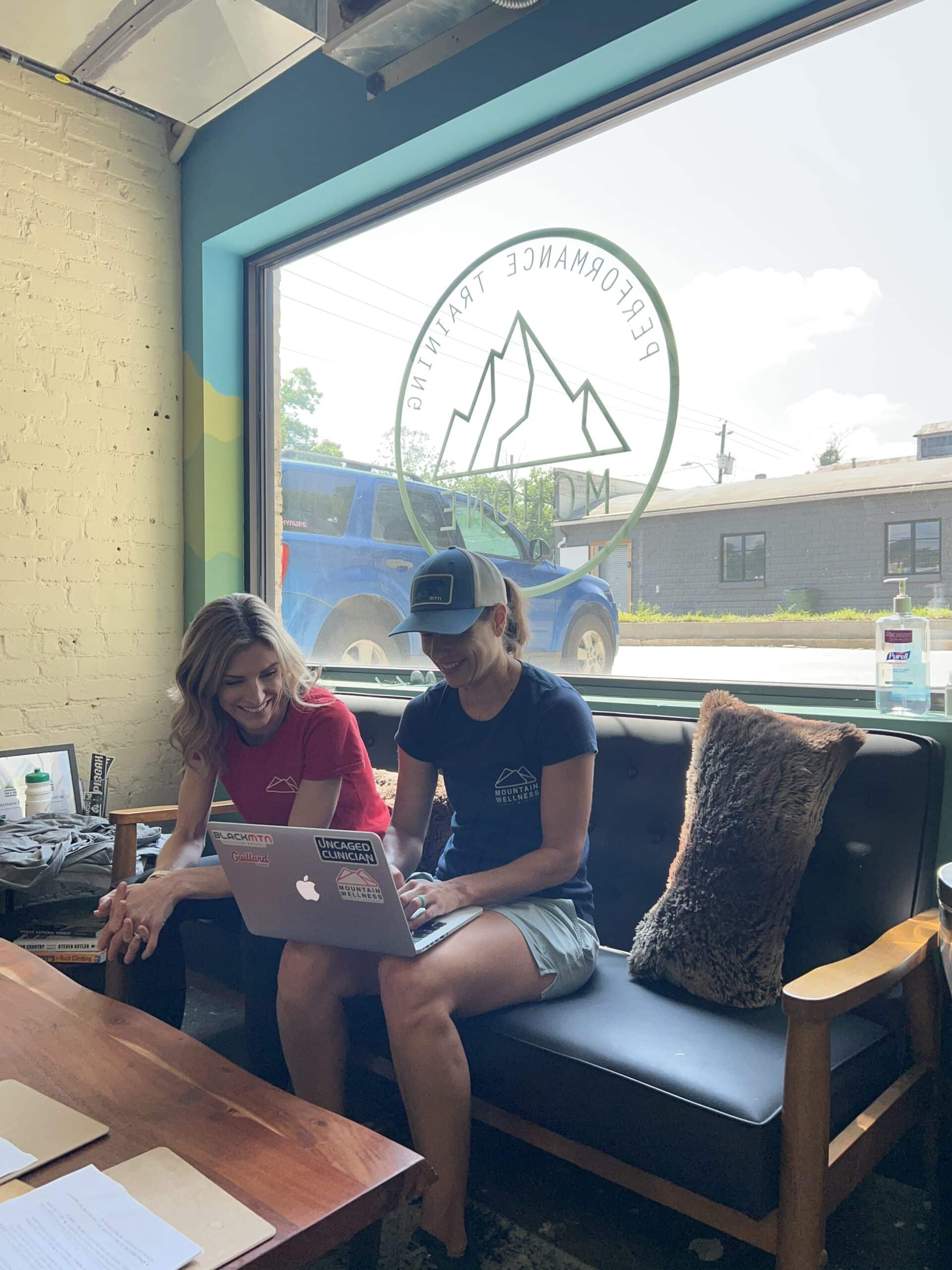
Our partnership with McHone Performance Training is a great example. Having a clinic inside their gym allows us to care for people seamlessly—helping their members stay healthy while giving our own patients a welcoming place to continue building strength and confidence. It feels less like a formal partnership and more like a shared mission rooted in the same values and outdoor mindset.
As a newer member of the Outdoor Business Alliance, we’re just beginning to build relationships and explore collaboration, but the alignment is clear. The OBA feels like a space where ideas, relationships, and similar values can grow over time. We’re excited to continue showing up, listening, and learning—knowing that meaningful impact comes from a community built intentionally and together.
4. What trends or changes in how people approach movement, injury recovery, or performance are you seeing in the outdoor community right now?
What I’m about to highlight isn’t a trend for us—it’s something we’ve been talking about and building toward for a long time. What’s changed is that people are finally feeling it for themselves. The switch is being flipped. We’re excited because people are starting to understand what we’ve believed all along.
One of the biggest shifts we are finally seeing is that people are becoming more thoughtful and curious about how they move, not just how hard they push. There’s a growing awareness that longevity matters—that being able to enjoy the outdoors for decades requires a different approach than simply training harder or pushing through pain.
More people are asking better questions: How do I recover well? How do I build strength that actually supports what I love to do? How do stress, sleep, and life demands affect my body? That curiosity has opened the door to more sustainable training and recovery habits.
We’re also seeing a shift away from “quick fixes” and toward care that feels more personalized and proactive. People are less interested in being told to rest indefinitely or handed a generic plan, and more interested in understanding their bodies and staying involved in the process.
Finally, there’s a noticeable change in how the outdoor community views overall wellness. Strength training, mobility, and recovery are no longer seen as things you do only when something hurts—they’re becoming part of how people are preparing to stay resilient through changing seasons of life.
I think on a larger scale as well, this is where people are wanting our healthcare system to change. People want to move well and care for their bodies in ways that support both performance and optimal long-term health.
5. Looking ahead, what are you most excited about for Mountain Wellness & Physical Therapy in the next few years?
In the next year, one of the things we are most excited about is expanding our women’s health offerings. Many active women—especially in their 30s, 40s, and beyond—are navigating changes in hormones, recovery, stress, and performance with very little guidance. We’re building programs and services that acknowledge those realities and support women in staying strong, capable, and confident in the activities they love.
In the next couple of years, rather than treating physical therapy as a stand-alone service, we’re also focused on deepening relationships with other professionals so our clients feel supported from multiple angles, not bounced between silos. We’re excited to be on the front end of a shift toward more connected, human-centered healthcare. So often, care feels fragmented, with providers working in isolation and patients left to piece everything together on their own. We see Mountain Wellness continuing to grow as a trusted hub and advocate—helping clients build a care team that actually communicates and works together in support of their goals.
Our bodies are uniquely and beautifully made. No matter what the future looks like, this is the heart of our mission—and we’re grateful to use the wonder of creation as part of the healing journey for our community.
Location Information: We have 2 offices. Black Mountain at 103 Black Mountain Ave and inside Mchone Performance Training at 5 Sweeten Creek Rd in Biltmore Village
