Outdoor spaces have the power to educate, inspire, and bring people together, and few organizations embody that belief more fully than FIND Outdoors. As a nonprofit partner of the U.S. Forest Service, FIND Outdoors connects people to public lands through immersive education programs, visitor services, and hands-on experiences that foster curiosity and care for the natural world. Their work helps ensure that forests are not only protected, but also accessible and meaningful to the communities they serve.
In this interview, we speak with Dallas Martin, Chief Education Officer at FIND Outdoors. Dallas shares insights into the organization’s educational vision, the importance of inclusive and engaging outdoor learning, and how FIND Outdoors is cultivating the next generation of forest stewards through thoughtful, place-based experiences.
1. Tell us about FIND Outdoors. What does your organization do across its campgrounds, visitor centers, and educational sites and what inspired your mission of helping people “find” connection in the outdoors?
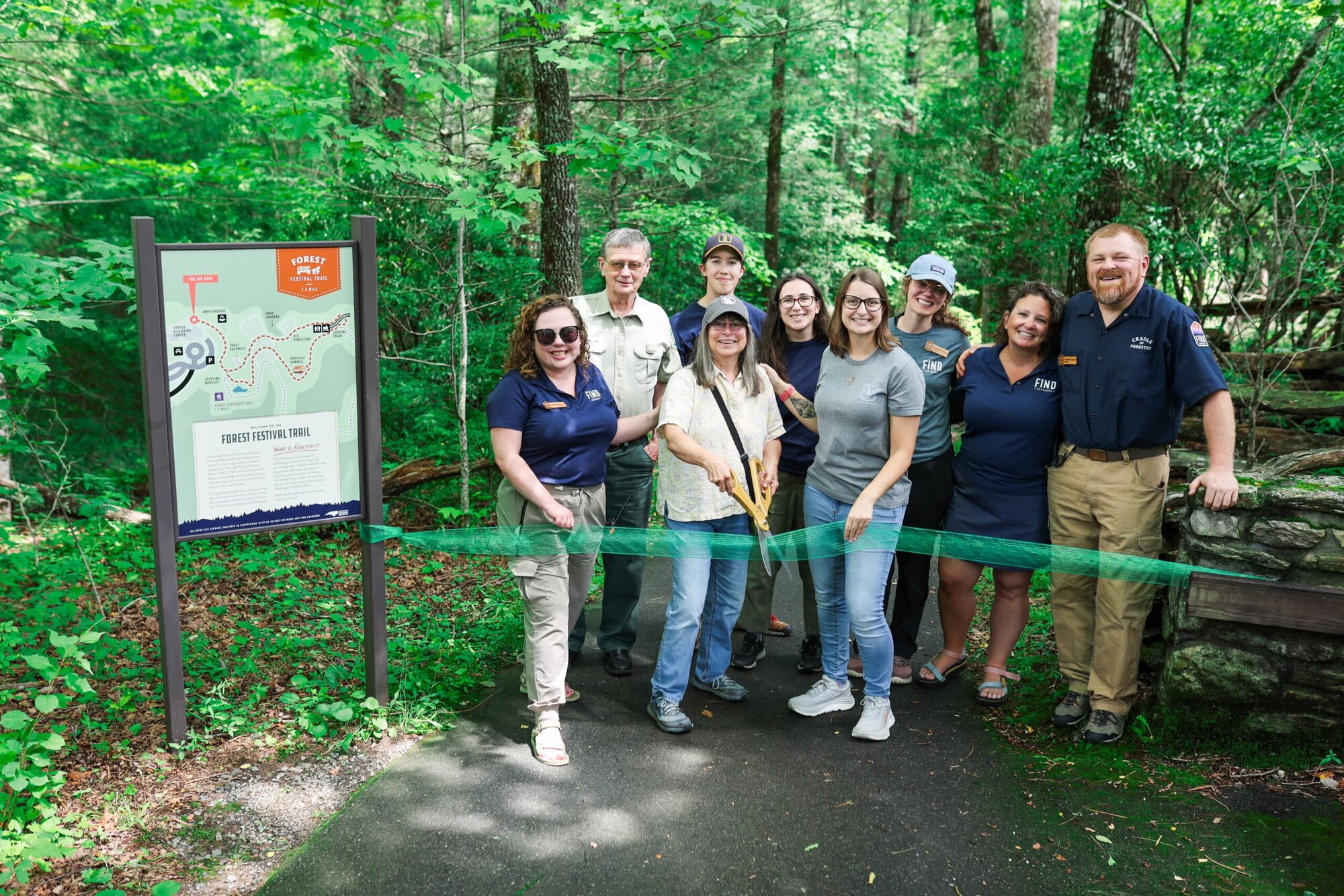
FIND Outdoors is an outdoor recreation nonprofit that centers education and stewardship. FIND stands for Forest Inspired Nature Discovery, but we were originally founded over 50 years ago as the Cradle of Forestry in America Interpretive Association (CFAIA). In 2020, we rebranded to better capture the work we are doing across the southeast- managing 13 sites in 3 states in collaboration with the US Forest Service. We hope to connect people to these beautiful sites by educating them on their importance and thus create a lifetime of stewards for our public lands.
2. What sets FIND Outdoors apart in the outdoor and recreation world? What makes your approach to education, stewardship, and visitor services unique?
In the southeast, FIND is pretty unique in the way we are able to operate. As a nonprofit, every dollar we earn goes directly back into maintaining and improving the public lands we manage and the educational offerings we host. Last year alone, FIND Outdoors reinvested over four million dollars back into these sites. It helps that the locations we steward are beautiful and unique places- like Brasstown Bald, the highest point in the state of Georgia or The Cradle of Forestry in Pisgah National Forest, the birthplace of Forestry in America.
3. How has being part of the Outdoor Business Alliance supported your work? Has the network helped with collaboration, visibility, shared resources, or new partnerships?
Being a member of OBA has been an invaluable experience. The resources provided and the connections made speak for themselves. Several members of our team have been benefitted by the alliance in some way, whether that be the Waypoint Resilience Cohort or the Networking Socials.
4. What’s one recent win or project you’re especially proud of?
I am really excited for the upcoming growth our organization is poised for in the next few years following our most recent strategic planning session. New and big things are coming. A most recent win that I am personally proud of is the growth in field trip attendance at the Cradle of Forestry this past year after reimagining all offerings at the beginning of the 2025 season. Our amazing education team served over 1,700 kids- reaching more youth since before 2017.
5. What advice would you give someone starting out in the outdoor nonprofit or public-lands space?
about?
The best advice I can give is to prioritize partnerships- the biggest challenges in this space are best tackled collaboratively. Seek out and lean on peers already doing work in stewardship, like those in the Outdoor Business Alliance. Additionally, remember that your mission is rooted in the place and communities you serve. Authentic stewardship starts with local engagement.