Since 1995, the Carolina Climbers Coalition (CCC) has worked to protect climbing access, conserve important natural areas, and connect people with the outdoors across the Carolinas. What began as a grassroots advocacy effort has grown into a regional leader in land conservation and stewardship, caring for more than 50 climbing areas through thousands of volunteer hours each year. As a member of the Outdoor Business Alliance, CCC is part of a collaborative community working to protect the landscapes that make Western North Carolina such a special place to live, work, and play. From its recent acquisition of Lower Ghost Town near Chimney Rock to its ongoing access and stewardship efforts, CCC is helping ensure these remarkable places remain open for future generations. We spoke with Mike Reardon, Executive Director of the Carolina Climbers Coalition, about the organization’s mission, the power of community partnerships, and what it takes to protect the places we love to explore.
1. Tell us about the Carolina Climbers Coalition. What does the organization do, and what inspired its founding?
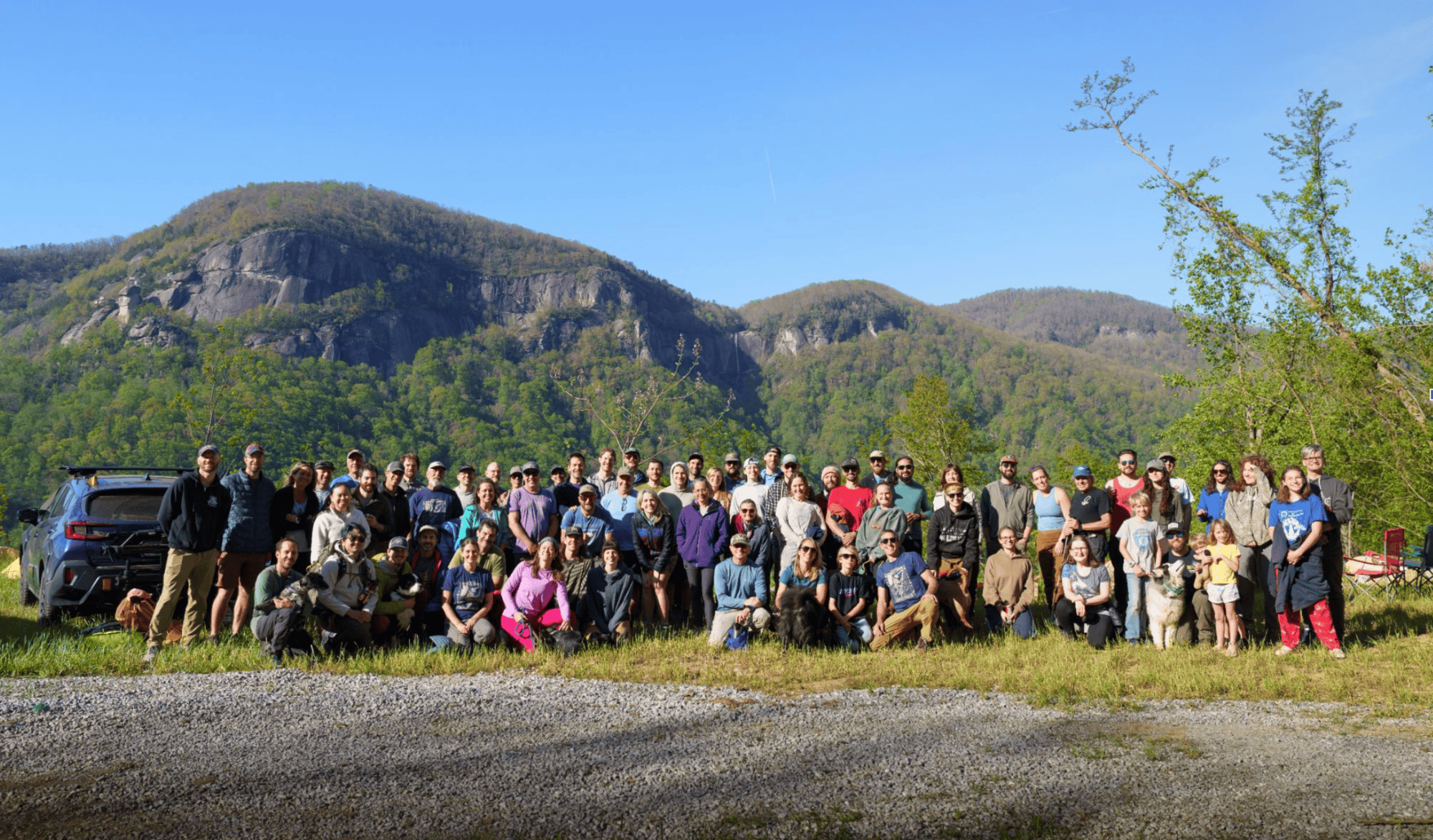
Climbers Coalition (CCC) is a 501c(3) nonprofit formed in 1995 to protect, preserve, and expand climbing opportunities throughout the Carolinas and beyond. We began as an advocacy based nonprofit, working with NC State Parks to sustain and eventually expand permissible public rock climbing access within five North Carolina State Parks. Since the CCC’s inception, the scope and impact of the organization has grown extensively. The CCC now maintains, has opened, or currently stewards over 50 climbing areas within the Carolinas. Their 8000 plus hours of stewardship coordinated per year includes trail building, trail maintenance, bolt replacement, graffiti removal, rare species protections, volunteer coordination, public lands advocacy, invasive species control, climber education, and land conservation. In addition to serving federal, state, private, and municipal lands, the organization owns five major climbing destinations in North Carolina and one in Virginia. All of these lands are free to access and open to public enjoyment, and more information about many of these areas can be found here. The CCC is operated by a thirteen person Board of Directors, two admin staff, and four trail staff, and has an increasing annual volunteer membership of 1250+.
2. What sets the CCC apart in the outdoor industry, particularly in its work to protect climbing access, conserve land, and steward climbing areas across the Carolinas?
Our publicly available outdoor recreation lands are a big part of what makes North Carolina so special. The cliff faces and boulder fields of our region offer some of the most dramatic experiences and places in our corner of the Appalachians. We strive to make these special places legally accessible, conserving both place and experience for visitors and residents of our mountains. Climbing is such a unique experience in that it forces participants to focus on the minutia of geology and body movement, providing both physical and mental challenges, all in beautiful settings. These challenges typically happen with friends or partners, each encouraging others to overcome goals and learn from experiences. All of these elements combined make climbing an experience that people want to return to on a regular basis. Our organization works to protect and expand those experiences because we believe that they have far reaching benefits. Protecting that access and protecting these places means something different for each land that we work within, but the heart of our work springs from a desire to get people out climbing, learning, and loving the land.
3. How has being part of the Outdoor Business Alliance impacted the CCC or your journey? Have any OBA connections, collaborations, or relationships opened new doors or strengthened your work?
People live, work, and play in Western North Carolina because our mountains give us so many memorable opportunities. This desire to be in the mountains is what has spawned our region to be a hub of outdoor recreation, leading to the need for conservation organizations to help conserve lands. People’s desire to recreate on these lands have also created the need for gear manufacturers and experience providers to help bring people to these lands with the right tools to recreate responsibly. The OBA has created an ecosystem where nonprofits serving publicly available lands, gear manufacturers, guides, accommodation spaces, outfitters, and retailers can collaborate toward shared goals. The OBA brings us all a sense of community within outdoor industry leaders in WNC. The CCC is a proud member of the OBA.
4. What’s one recent project, milestone, or win that the CCC team is especially proud of?
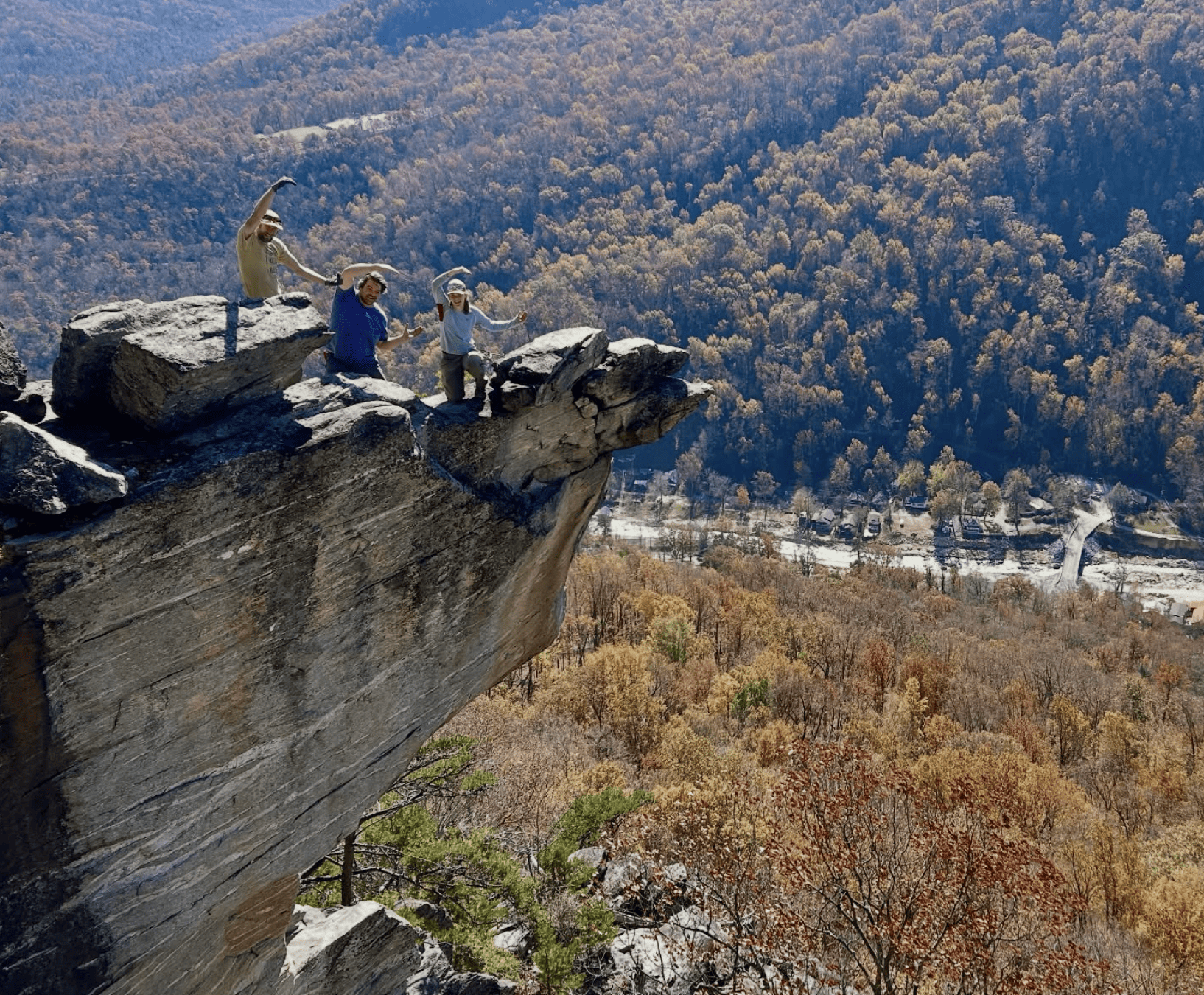
This past year, the CCC purchased the formerly closed climbing area we call Lower Ghost Town near Lake Lure, NC. We are now building roughly 2 miles of trail to the many cliffs of Ghost Town, with a trailhead on Main St of Chimney Rock Village, just behind the BBQ place. The Ghost Town cliffs of Round Top Mountain sit adjacent to Chimney Rock State Park at the southeastern end of Hickory Nut Gorge. This is the most dramatic end of the gorge, with views of sheer cliffs in all directions.
Climbers began visiting the Ghost Town in the mid-1970s when a mock western amusement park called Silver City opened in the meadow just under the cliffs, coupled with a gondola ride from Main St in Chimney Rock. Climbers in the ’70s were known to ride the gondola, explore splitter cracks by day, and camp out in the amusement park’s faux jail at night. After the amusement park closed its doors, a developer made plans to construct 40 house sites on the property, which failed in the early 2000s. The allure and mystique of Ghost Town began catching on via word of mouth and climbers in the 1990s to early 2000s discovered 400’ immaculate faces, NC’s largest collection of cracks, unrivaled positioning over Hickory Nut Gorge, and black and orange streaked rock with severe overhangs. Ghost Town offered a collection of atypical geologic formations all in a prominent setting over the gorge that allured moderate and elite climbers alike. Three of North Carolina’s hardest climbs were established during this time, including The Good (13d trad), The Bad (14b sport), and the still unsent The Ugly (project). Property sales in the early 2000s and the growth of climbing brought on ‘no trespassing’ warrants, causing climbing in the area to fizzle, but climbers have not forgotten Ghost Town’s relevance. The CCC kept the property in close sites until Chimney Rock Glamping purchased the property in 2023, and agree to sell a portion of the cliffs to the CCC for climbing, hiking, and public access.
“For over 20 years, Ghost Town has been our highest access priority among closed areas. Conserving this property was truly a team effort over decades of concentration with a diverse set of stakeholders.” said Mike Reardon, Executive Director of the CCC. “The major players of that team include various CCC members, the Access Fund, the Village of Chimney Rock, Rutherford County TDA, NC State Trails Program, Conserving Carolina, CR Glamping, and the Great Trails State Coalition. Each of these organizations contributed so much over the years to make this once ‘lofty’ dream a reality.”
Hurricane Helene battered Chimney Rock Village. Two years later, the effects are still obvious. “The Chimney Rock Village TASK Force has created an impressive master plan for rebuilding the Village following Helene,” says Village Mayor Peter O’Leary. “This climbing area will be a wonderful asset in that plan for the Village and the Gorge. We love to work with partners like the CCC who understand the importance of this area for recreation and outdoor activities. This will certainly add to the lure of Hickory Nut Gorge for tourists as well as outdoor enthusiasts.”
Lower Ghost Town is our sixth land acquisition.
5. What advice would you give to someone just starting out in the outdoor industry, conservation, or nonprofit world?
y?
If there is not an outdoor community in your area, start small and build steadily. Realize that even people that do not participate in the exact activity that you do still may be interested in being part of your outdoor community. Find an easy ‘win’ and let that win inform the story of your next goal. Be sure your goals are shared goals, and generated by dedicated leaders within your community.
If there is an outdoor community in your area, you are in luck! Begin connecting with organizations or people that align most with your values and mission. Continually refine your businesses’ or nonprofit’s story without losing site of the organizations mission and vision. Do not discount individuals or organizations that are outside your normal circle; sometimes people are not tied very closely to you have some of the best insights or offer unforeseen opportunities. For nonprofits and conservation organizations, do not be afraid to ask for what you need to best fulfill your mission. Being perceptive about the timing of that ask, and your confidence of it, comes with experience and sensitivity.